Eat your healthy salad with every meal
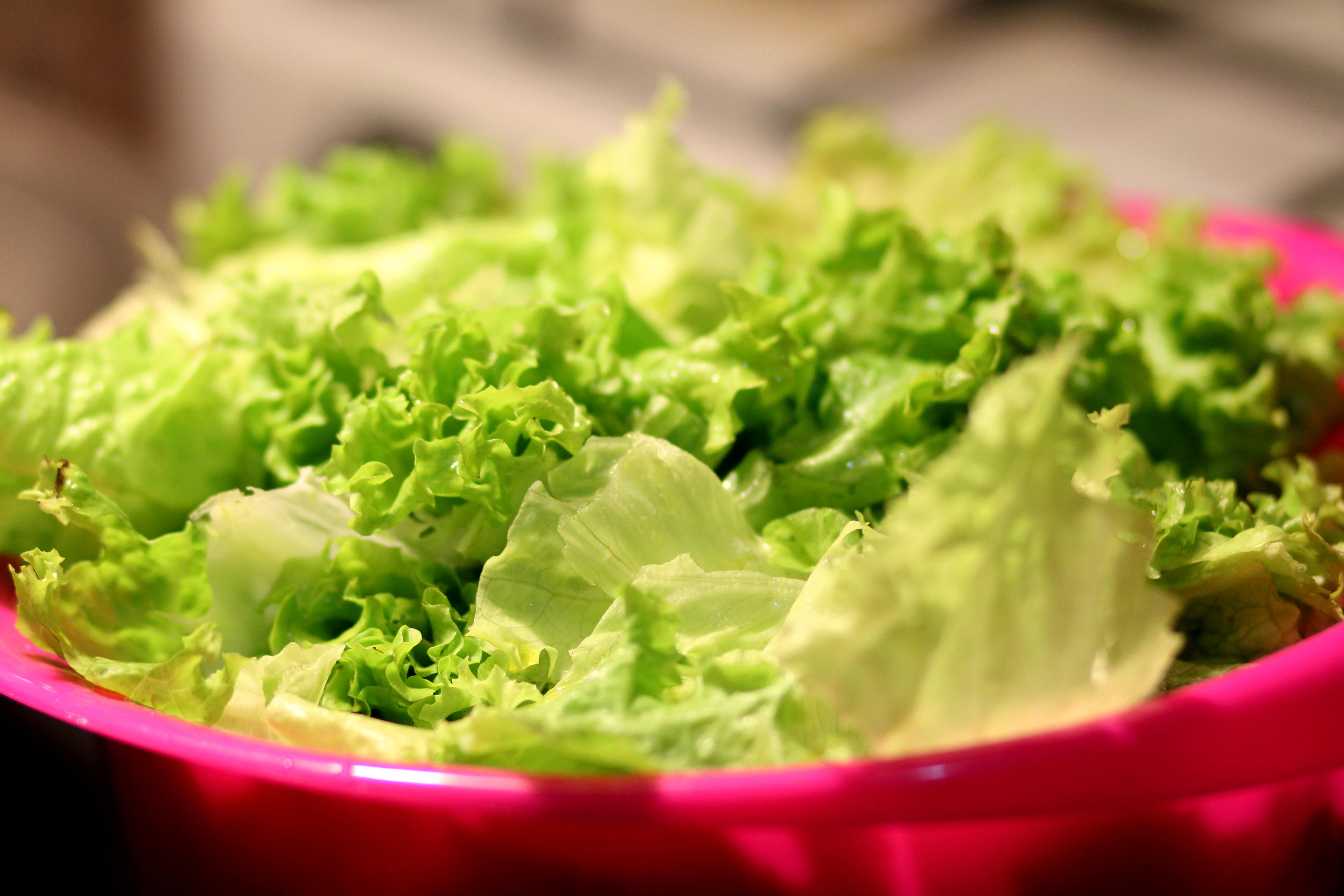
Oh yeah, salad again!
Salads and leafy greens will help you heal your gut and get rid of your symptoms. When I say big salad, I mean a big salad. If other people are not shocked or not commenting about size of our salads than we are not doing it right. Here are some examples footage from my meals.
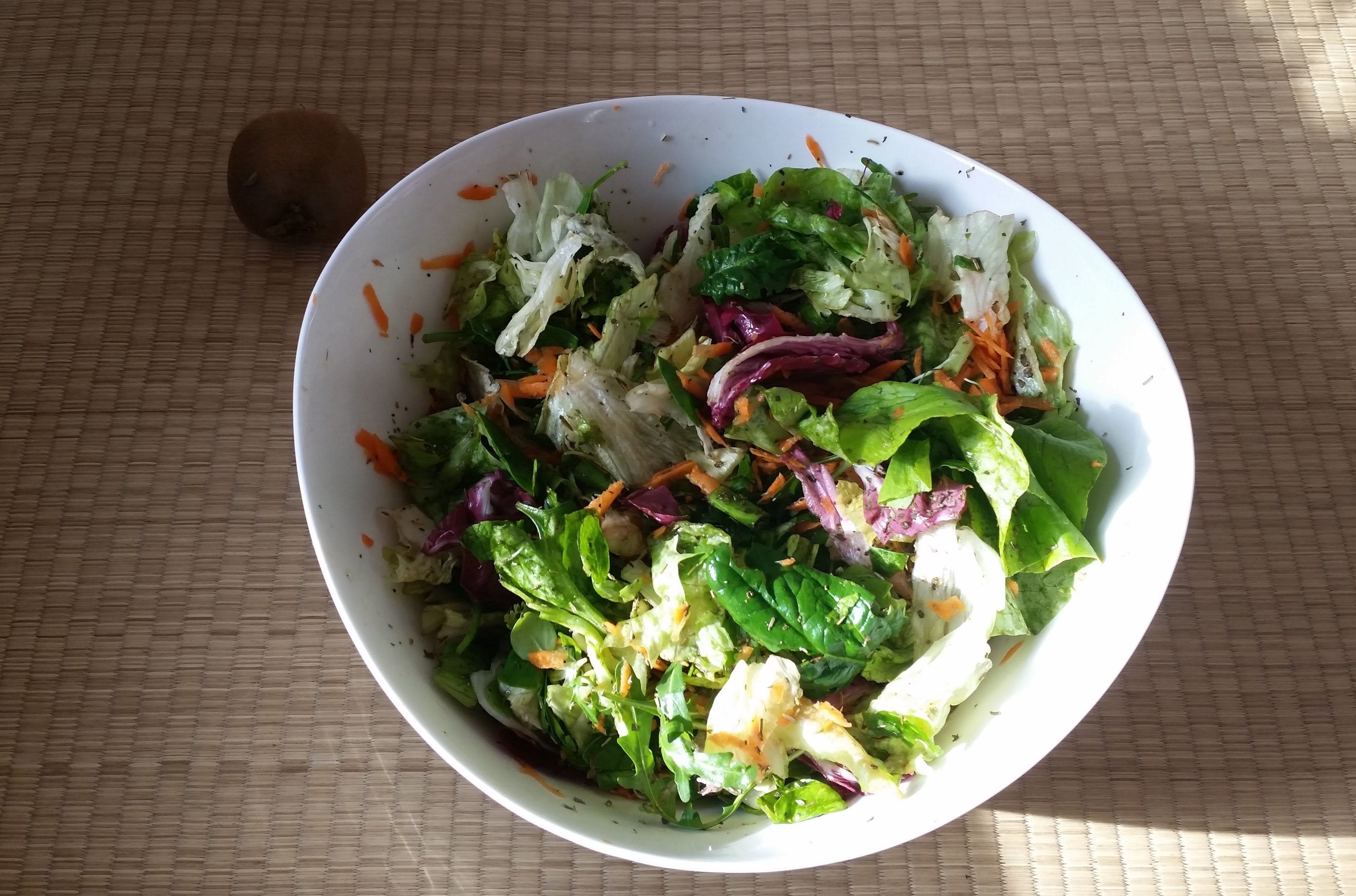
For reference a kiwi fruit resting next to my bowl of salad.
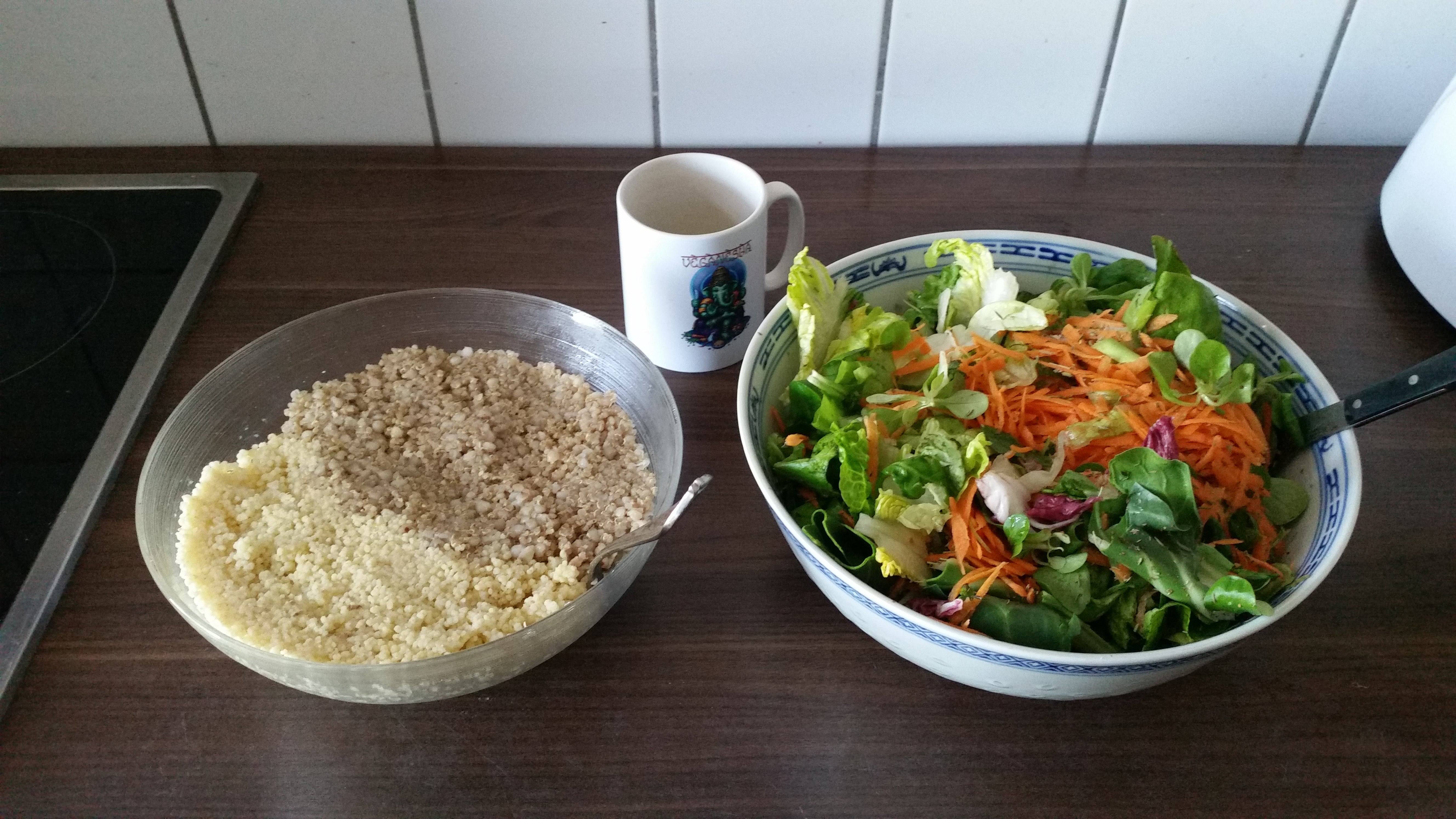
In the previous post, we talked about mindset and the can-do mentality. It really helped me a lot to eat mostly the same things over and over again. After a while, I get used to my salads without dressing. Sometimes I was adding a pinch of salt to my big bowl but that was it as far as flavor enhancers go.
Don’t be intimidated by the salads, try to enjoy them, if you don’t, in the beginning, you will after a while. This kind of disease forces us even to train our taste buds. Eat your salads, chew them well and stay healthy.
What does the research say about vegetables, fiber and your gut?
Nobody studies “a salad”, because a salad can be anything. But vegetables and fiber are some of the most studied foods there are, and a big salad is mostly those two things. It also makes you full so you don’t crave some of the foods that are worse for your gut. Here is what the human studies show.
The World Health Organization (WHO) advises everyone older than 10 to eat at least 400 grams of fruit and vegetables and 25 grams of fiber a day. Harvard says most Americans get about 15 grams of fiber.
Does fiber lower the risk of gut disease?
For Crohn’s disease, the evidence is fairly consistent.
- In the Nurses’ Health Study, 170,776 women were followed for 26 years. Those in the top fifth for fiber (a median of 24.3 grams a day) had a 40% lower risk of Crohn’s disease (HR 0.59, 95% CI 0.39 to 0.90). The effect was strongest for fiber from fruit.
- UK Biobank followed 470,669 people for about 12 years and found a similar pattern. Higher fiber went with lower Crohn’s risk (HR 0.48, 95% CI 0.32 to 0.72).
- A 2025 review pooled cohorts with more than 2 million adults. High fiber intake went with a lower risk of Crohn’s disease (pooled aHR 0.53, 95% CI 0.41 to 0.70).
- A 2021 meta-analysis looked at vegetables on their own. Vegetable intake went with lower risk of both Crohn’s disease and ulcerative colitis (RR 0.52 and 0.56).
The limits matter. These are observational studies. People reported their food on questionnaires, and people who eat more vegetables also live differently in other ways. They show an association, not proof. Fiber also did not clearly protect against ulcerative colitis in the first two studies. And one large study across 21 countries (the PURE study) found that fruit, vegetables and legumes were not associated with IBD. So the research does not say that more vegetables prevent every gut disease.
Does eating less processed food matter too?
I think it does, and this is where a big salad helps twice. In the PURE study, 116,087 adults were followed for almost 10 years. People who ate 5 or more servings of ultra-processed food a day had an 82% higher risk of inflammatory bowel disease than people who ate less than 1 serving (HR 1.82, 95% CI 1.22 to 2.72). In three US cohorts with 245,112 people, the highest fifth of ultra-processed food intake had a 70% higher risk of Crohn’s disease (HR 1.70, 95% CI 1.23 to 2.35). A 2025 meta-analysis found the same size of effect (aHR 1.71). Again, this is association. But three separate sets of data point the same way.
What does fiber do inside the gut?
Gut bacteria ferment fiber and release short-chain fatty acids. A 2021 review calls these fatty acids a key factor for keeping the intestinal barrier healthy, though a lot of that work comes from lab and animal studies. In mice, a low-fiber diet made gut bacteria eat away the protective mucus layer of the colon. Nobody has measured that in people.
The human results are more mixed than the mouse results. A review of 44 human trials found that fiber does not always raise short-chain fatty acids in healthy adults. A Stanford trial with 18 people per group found that 17 weeks on a high-fiber diet did not increase gut bacteria diversity, while a diet rich in fermented foods did. A review of 12 studies on gut permeability in healthy people found no strong evidence that diet raises or lowers it, although chicory inulin (a fiber) did reduce it with moderate certainty.
Variety seems to matter. In the American Gut Project, people who reported eating 30 or more different plants a week had more diverse gut bacteria than people who reported fewer than 10. Diet was self-reported at one point in time, and the researchers say 30 is a guideline, not a hard cutoff.
Does fiber lower inflammation?
A little. A meta-analysis of 14 trials found that fiber lowered CRP, a blood marker of inflammation, by 0.37 mg/L (95% CI -0.74 to 0). That is a small effect, and it showed up mainly when the fiber gap between the groups was at least 8 grams a day.
Vegetables alone: I found one decent trial. In 63 healthy young adults, two weeks on diets with extra cruciferous vegetables (the cabbage family) lowered IL-6, another inflammation marker, by about 19 to 20% compared with a diet without vegetables. The results were mixed, though. CRP and TNF-alpha did not change, and on one of the diets IL-8 went up by 16%.
What about rheumatoid arthritis?
RA has more diet trials than most autoimmune diseases, and they are not all the same. The positive ones first.
- A 1991 trial in The Lancet put 53 patients on a short fast, then a vegan diet, then a vegetarian diet for a year. The diet group did better on every measure they tracked. The trial was only single-blind, and the diet group spent the first four weeks at a health farm while the control group spent them at a convalescent home.
- A 12-month trial of 66 patients compared a gluten-free vegan diet with a normal diet. Among those who stayed on the diet for 9 months or more, 40.5% reached the ACR20 improvement mark, against 4% on the normal diet. Only 22 of the 38 in the vegan group made it that far, and X-ray joint damage was not slowed in any group.
- A 2022 randomized crossover trial of 44 patients tested a low-fat vegan diet, with an elimination phase, against a placebo supplement. Disease activity (DAS28) fell from 4.5 to 2.5 on the diet and from 3.2 to 2.9 on placebo. The difference was significant (P = .01). It was no longer significant (P = .11) among people who changed no medication during the trial, patients knew which phase they were in, and the diet phase started from a higher score. People also lost about 6.5 kg on the diet, which could explain part of the drop.
Now the results that did not show a clear effect.
- In the 2020 ADIRA trial, 50 patients ate an anti-inflammatory diet for 10 weeks. The main analysis found no significant difference in disease activity (P = 0.116), although an unadjusted analysis did.
- In a 1998 trial of an uncooked vegan diet, patients felt better, but objective measures did not differ from the control group, although a combined index did favor the diet. Half had nausea or diarrhea and stopped early.
- A 2009 Cochrane review of 15 trials (14 of them randomized) with 837 patients could not combine the results. It called the effect of diet still uncertain, since the trials were small and at moderate to high risk of bias. Fasting followed by a vegetarian diet, and a Cretan Mediterranean diet, may each have reduced pain in a single trial, but not stiffness or physical function.
What I take from this: diet seems to ease pain, and in some trials swelling and stiffness, in some people. No diet has been shown to replace medication or to stop joint damage. The trials report group averages, so they can’t tell you who the diet will help. That is a limit of the method. It is not proof that it doesn’t work for you.
What about ankylosing spondylitis?
The evidence is much thinner. A 2018 systematic review of 16 studies called it “extremely limited and inconclusive”, because most studies were small and at moderate to high risk of bias. I found no published randomized trial of the low-starch diet that is often discussed in AS groups. An Italian study of axial spondyloarthritis found that people given Mediterranean diet advice for 6 months more often had at least a 20% drop in disease activity than people who were not. But it was observational, not randomized, and only 47 of the 81 people in the advice group were followed to the end.
What about overall health?
A 2019 Lancet analysis of 185 studies found that people eating the most fiber had a 15 to 30% lower risk of dying early and of heart disease, stroke, type 2 diabetes and colorectal cancer. The benefit was greatest at 25 to 29 grams of fiber a day. The authors rated the certainty as moderate. A 2017 analysis of 95 studies found that every extra 200 grams of fruit and vegetables a day went with a 10% lower risk of dying from any cause (RR 0.90, 95% CI 0.87 to 0.93).
So does a big salad heal the gut?
No trial has tested my exact routine. What the research does support is simpler. More vegetables and fiber, and less ultra-processed food, go with lower rates of autoimmune disease, slightly lower inflammation markers and a longer life. For me that is enough reason to keep eating a big salad with every meal.
(Updated: )