Plant-Based Diet, Exercise and Stress Management for RA, Ankylosing Spondylitis and Other Autoimmune Diseases
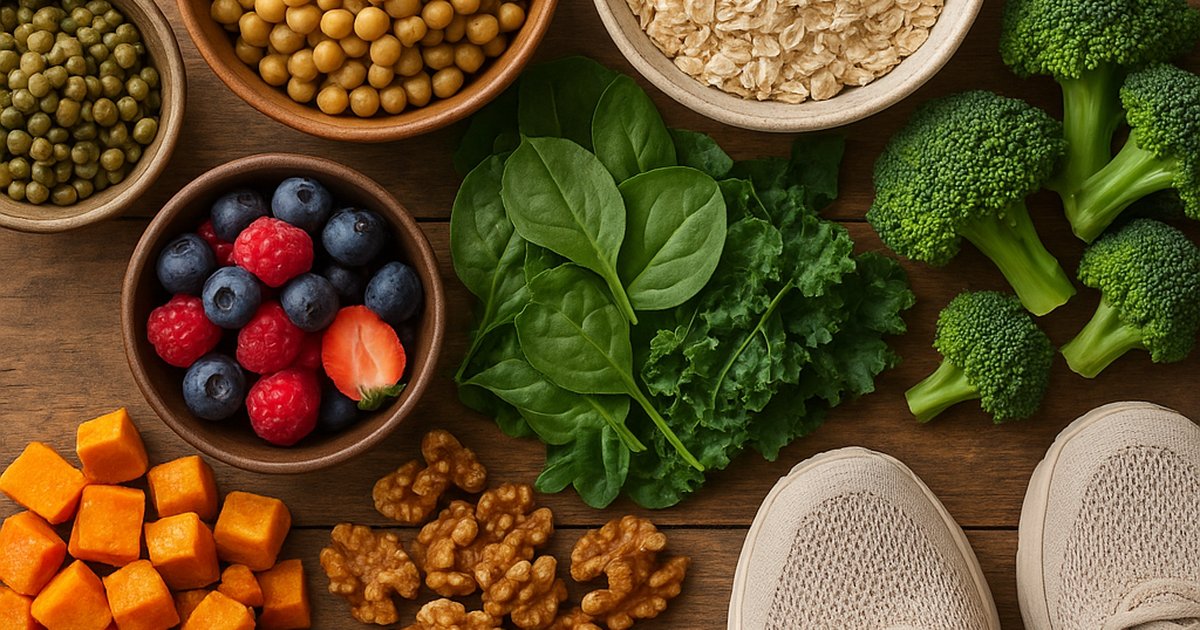
What you eat, how much you move and how you handle stress all helps, every single day.
I have been living symptom free from AS since 8 years thanks to the FH Protocol doing Multi Day Ironmans or 160km runs but lets also check the recent research what it says.
Rheumatoid arthritis (RA) has the strongest evidence, including a randomized trial called Plants for Joints. For ankylosing spondylitis (AS), multiple sclerosis (MS) and gut-based autoimmune diseases like Crohn’s disease and ulcerative colitis, the evidence is smaller. It mostly points the same way, with a few exceptions. This post goes through all of it, with links to the original studies so you can read them yourself.
What is the Plants for Joints trial?
A team in Amsterdam randomized 83 people with RA who had low-to-moderate disease activity (DAS28 between 2.6 and 5.1). One group followed a 16-week lifestyle program. The control group got usual care. Medication was kept stable for three months before the trial and during it, wherever possible. So the change you see is not just a new drug.
The program had three parts:
- A whole-food, plant-based diet. Higher fiber intake has been linked to lower RA risk. In a US survey of more than 15,000 adults, people eating more than 19.1 g of fiber a day had a 25% lower risk of RA. In a small German study of 36 people with RA, 28 days of extra fiber raised the number of regulatory T cells, the immune cells that calm autoimmune reactions.
- Physical activity. A 2022 review found that exercise lasting 12 weeks or longer can lower RA disease activity.
- Stress management. In interviews with people with RA and spondyloarthritis, stress and overexertion were seen as important triggers of flares. In a Dutch trial, a short stress management training lowered stress-induced IL-8 levels at follow-up. In an Iranian study, stress management improved quality of life in women with RA.
What did the trial find?
After 16 weeks, the Plants for Joints group had a 0.9-point greater drop in DAS28 than the control group (95% CI 0.4 to 1.3, P < 0.0001). 18 of 40 people in the lifestyle group had a DAS28 below 2.6 (remission range), against 3 of 37 in the control group. That is an odds ratio of 4.6. It worked in both seropositive and seronegative RA.
The lifestyle group also lost more body weight (3.9 kg), fat mass (2.8 kg) and waist size (3 cm). HbA1c fell by 1.3 mmol/mol and LDL cholesterol by 0.32 mmol/l more than in the control group. Patient-reported measures such as function, fatigue and pain did not change significantly, and neither did blood pressure.
No serious adverse events occurred. The adverse events that were recorded were mostly abdominal symptoms like bloating and stool changes, and they showed up in both groups.
What happened a year later?
After the 16 weeks, the control group switched to the program too, and everyone was followed for another year. In the one-year follow-up, 65 of the 77 people with RA took part. The DAS28 improvement of 0.9 points was still there. So were the improvements in CRP, waist size and LDL cholesterol. The original control group saw the same benefit once they did the program. Adherence stayed largely high, and overall the participants ended up on less medication.
Dr. Michael Greger goes through these results in his How Not to Hurt presentation. He adds that about half of the people with RA had cut down or stopped their pain medication by the one-year mark.
Is there older evidence?
Yes. A 13-month trial put people on a vegan diet for about three and a half months, then an egg-free vegetarian diet. Compared with a control group, they had less morning stiffness, less pain, more grip strength, fewer tender and swollen joints and lower inflammation markers. They also lost about 13 pounds. The original paper is Kjeldsen-Kragh et al., The Lancet, 1991.
A NutritionFacts piece on fasting followed by a plant-based diet adds an important detail: in these trials the benefit lasted only when people kept eating a plant-based diet after the fast.
What about ankylosing spondylitis?
The evidence is thin. NutritionFacts describes a 33-year-old man with sacroiliitis, a common feature of AS. Conventional therapies and drugs had not stopped his pain. When he avoided all animal foods, his complaints improved “distinctly and persistently” within days. They came back when he ate meat again. On a plant-based diet he was off most of his drugs and almost free of symptoms. The original case report is Huber et al., 2001.
That is one patient, not a trial. Newer work is still thin:
- A 2023 systematic review of diet and disease activity in spondyloarthritis found 15 studies. Most were at high risk of bias, and it concluded that the evidence for dietary behaviors is scarce and heterogeneous.
- In the French SANUT study of 278 people with axial spondyloarthritis, higher disease activity went with a low intake of omega-3 fatty acids and fiber and a high intake of ultra-processed foods. This kind of study shows an association, not cause and effect.
I read this as a reason to study AS properly.
What about Crohn’s disease and ulcerative colitis?
The gut-based autoimmune diseases have more data. Most of it comes from one group of gastroenterologists in Japan.
- Crohn’s disease. In a two-year trial of 22 people who were in remission, those who kept a semi-vegetarian diet (vegetarian, with a little fish and meat now and then) stayed in remission far more often than those who went back to an omnivorous diet: 15 of 16 (94%) against 2 of 6 (33%). Remission with the diet was 100% at one year and 92% at two years. NutritionFacts covers it in Eating to Treat Crohn’s Disease.
- Ulcerative colitis. In a single-group trial of 60 people with mild UC or UC in remission, a two-week hospital stay with a plant-based diet and dietary guidance was followed by low relapse rates: 2% at one year and 19% at five years. 77% had less or no bloody stool during the hospital stay. NutritionFacts covers it in The Best Diet for Ulcerative Colitis Treatment.
A newer, randomized pilot trial from 2025 tested two 5-day cycles of a low-calorie, plant-based diet in 32 people with active UC who were starting advanced drug therapy. The diet did not significantly improve the response to the drugs (57% against 35% responding, P = .11). It did give a greater improvement in symptom scores and more people were tapered off steroids. The trial stopped early because of COVID-19, so it was small.
The Japanese studies were small, and they did not randomize people to diets. NutritionFacts points out that systematic reviews of randomized trials call the effect of diet on IBD uncertain, simply because trials like this are missing. It argues that people with IBD still deserve advice based on the best available evidence.
Diet may also matter before the disease starts. NutritionFacts reports that in the Harvard Nurses’ Health Study, women with the highest long-term fiber intake had a 40% lower risk of Crohn’s disease.
What about multiple sclerosis?
MS has more diet trials than AS, and they are randomized. Diet seems to help fatigue, one of the most disabling MS symptoms. Nobody has shown yet that it changes the disease itself. And not every diet tested was plant-based.
- Very-low-fat, plant-based diet. In a one-year trial of 61 people with relapsing-remitting MS, those on the diet had less fatigue, a lower body mass index and better LDL cholesterol and insulin. Brain scans, relapse numbers and disability did not differ from the control group.
- Low-fat diet. A 16-week trial of 39 people found a significant drop in fatigue on a diet with no more than 20% of calories from fat, compared with a waiting-list group.
- Swank and Wahls diets. The WAVES trial randomized 87 people to the low-saturated-fat Swank diet or the Wahls diet, a modified Paleolithic diet. It excludes grains, legumes and dairy, and it includes meat. Both groups had clinically meaningful drops in fatigue and gains in quality of life, which held at 24 weeks. There was no control group, so this compares two diets and does not prove either one works.
- Pooled results. A 2023 network meta-analysis of 12 trials and 608 people found that Paleolithic, low-fat and Mediterranean diets reduced fatigue more than a usual diet. But it rated the certainty of the evidence as very low, because the trials were small and at risk of bias.
For movement, a randomized trial of 69 people with MS compared a 6-month yoga class and a stationary-bike exercise class with a waiting list. Both groups improved on fatigue. Neither improved attention or alertness.
Why might diet matter? Two ideas, both unproven
- Gut bacteria and fiber. When gut bacteria digest fiber, they make short-chain fatty acids such as butyrate. NutritionFacts describes how these can help seal a leaky gut and fight inflammation. It also points out that you need the right fiber-eating bacteria to get the full benefit. This is one reason the gut-based diseases are such an important test case.
- A bacterium called Proteus mirabilis. A NutritionFacts video, Why Do Plant-Based Diets Help Rheumatoid Arthritis?, describes a theory that RA may be set off by an immune reaction to this bacterium. Patients who responded to a plant-based diet had a drop in antibodies against it (Kjeldsen-Kragh et al., 1995).
What I take from it
How strong the evidence is depends on the disease:
- RA: a randomized trial with a one-year follow-up, plus older diet trials.
- Crohn’s disease and ulcerative colitis: small trials, mostly without randomization, with striking results. The one randomized pilot was too small to say much.
- Multiple sclerosis: several small randomized diet trials. They show less fatigue, but no proven effect on relapses, scans or disability.
- Ankylosing spondylitis: a single case report, one association study and a systematic review that found little.
Plants for Joints was a package: food, movement and stress care together, next to regular medical treatment. We can’t tell from the trial which of the three parts did the most. And what works in one autoimmune disease can’t simply be assumed for the next, so each disease still needs its own trials.
Sources
- Walrabenstein et al., Rheumatology, 2023. A multidisciplinary lifestyle program for rheumatoid arthritis: the ‘Plants for Joints’ randomized controlled trial.
- Wagenaar et al., RMD Open, 2024. Long-term effectiveness of a lifestyle intervention for rheumatoid arthritis and osteoarthritis: 1-year follow-up of the ‘Plants for Joints’ randomised clinical trial.
- Liu & Xie, Medicine, 2023. Dietary fiber intake associated with risk of rheumatoid arthritis among U.S. adults: NHANES 2010-2020.
- Häger et al., Nutrients, 2019. The role of dietary fiber in rheumatoid arthritis patients: a feasibility study.
- Li & Wang, Frontiers in Immunology, 2022. Clinical effect and biological mechanism of exercise for rheumatoid arthritis: a mini review.
- Berenbaum et al., PLOS ONE, 2014. Fears and beliefs in rheumatoid arthritis and spondyloarthritis: a qualitative study.
- de Brouwer et al., Arthritis Research & Therapy, 2013. Immune responses to stress after stress management training in patients with rheumatoid arthritis.
- Alishiri et al., Iranian Journal of Psychiatry and Behavioral Sciences, 2017. Effect of stress management on quality of life in females with rheumatoid arthritis.
- Kjeldsen-Kragh et al., The Lancet, 1991. Controlled trial of fasting and one-year vegetarian diet in rheumatoid arthritis.
- Kjeldsen-Kragh et al., Annals of the Rheumatic Diseases, 1995. Decrease in anti-Proteus mirabilis but not anti-Escherichia coli antibody levels in rheumatoid arthritis patients treated with fasting and a one-year vegetarian diet.
- Huber et al., Forschende Komplementärmedizin und Klassische Naturheilkunde, 2001. Clinical remission of HLA-B27-positive sacroiliitis on a vegan diet.
- Chiba et al., World Journal of Gastroenterology, 2010. Lifestyle-related disease in Crohn’s disease: relapse prevention by a semi-vegetarian diet.
- Chiba et al., The Permanente Journal, 2018. Relapse prevention in ulcerative colitis by plant-based diet through educational hospitalization: a single-group trial.
- Ortolan et al., Joint Bone Spine, 2023. The impact of diet on disease activity in spondyloarthritis: a systematic literature review.
- Vergne-Salle et al., Nutrients, 2022. Diet and disease activity in patients with axial spondyloarthritis: SpondyloArthritis and NUTrition Study (SANUT).
- Damas et al., Clinical Gastroenterology and Hepatology, 2025. A pilot randomized control trial to assess the adjunctive effect of diet on response to advanced therapies in patients with ulcerative colitis.
- Yadav et al., Multiple Sclerosis and Related Disorders, 2016. Low-fat, plant-based diet in multiple sclerosis: a randomized controlled trial.
- Chase et al., Multiple Sclerosis Journal, 2023. A low-fat diet improves fatigue in multiple sclerosis: results from a randomized controlled trial.
- Wahls et al., Multiple Sclerosis Journal: Experimental, Translational and Clinical, 2021. Impact of the Swank and Wahls elimination dietary interventions on fatigue and quality of life in relapsing-remitting multiple sclerosis: the WAVES randomized parallel-arm clinical trial.
- Snetselaar et al., Neurology, 2023. Efficacy of diet on fatigue and quality of life in multiple sclerosis: a systematic review and network meta-analysis of randomized trials.
- Oken et al., Neurology, 2004. Randomized controlled trial of yoga and exercise in multiple sclerosis.
- How Not to Hurt—Live Presentation, NutritionFacts.org
- Why Do Plant-Based Diets Help Rheumatoid Arthritis?, NutritionFacts.org
- Does Fasting Help Rheumatoid Arthritis?, NutritionFacts.org
- How to Cultivate a Healthy Gut Microbiome with Food, NutritionFacts.org
- Does Fasting Help Autoimmune Diseases?, NutritionFacts.org
- Eating to Treat Crohn’s Disease, NutritionFacts.org
- The Best Diet for Ulcerative Colitis Treatment, NutritionFacts.org
- Preventing Crohn’s Disease with Diet, NutritionFacts.org
(Updated: )