Autoimmune Disease, Diet and the Gut
Summary
Diet is one part of living with an autoimmune disease, not a substitute for treatment. Researchers have found links between the gut and conditions such as rheumatoid arthritis and ankylosing spondylitis. They haven’t shown that a “leaky gut” causes either condition, or that a particular food can repair the gut and put the disease into remission.
This guide brings together my original six-part series. I still enjoy exploring plant-based food, but what works in my kitchen is different from what’s been shown to work in a clinical trial. Here’s where the evidence and my approach meet, and where they don’t.
What does “leaky gut” mean?
Your gut lining lets nutrients through and helps keep other substances out. When more gets through than usual, researchers call it increased intestinal permeability. The microbes living in and around the gut are a related but separate part of the picture. For a quick introduction, see what the human microbiome is.
In a small study of rheumatoid arthritis, some blood markers associated with gut permeability fell in people whose arthritis responded to biologic treatment. That leaves an important question open: did changes in the gut contribute to the disease, did the disease affect the gut, or both? In a separate study of spondyloarthritis, researchers found microscopic gut inflammation in some patients. That is not the same as showing that food proteins leave the gut and cause joint flares. See my closer look at genetics and gut findings in both conditions.
Can changing what you eat help?
For rheumatoid arthritis, the American College of Rheumatology guideline gives a conditional recommendation for a Mediterranean-style diet alongside usual treatment. The evidence it reviewed suggested some improvement in pain, but no clear improvement in physical function or disease activity. For people with rheumatic conditions more broadly, the EULAR recommendations favor a balanced diet and caution that individual foods are unlikely to have a large effect on disease outcomes.
I wouldn’t use the rheumatoid arthritis findings to promise the same results for ankylosing spondylitis. I’ve written separately about what the vegetable, fiber and rheumatoid arthritis diet studies actually tested.
What might that look like at dinner?
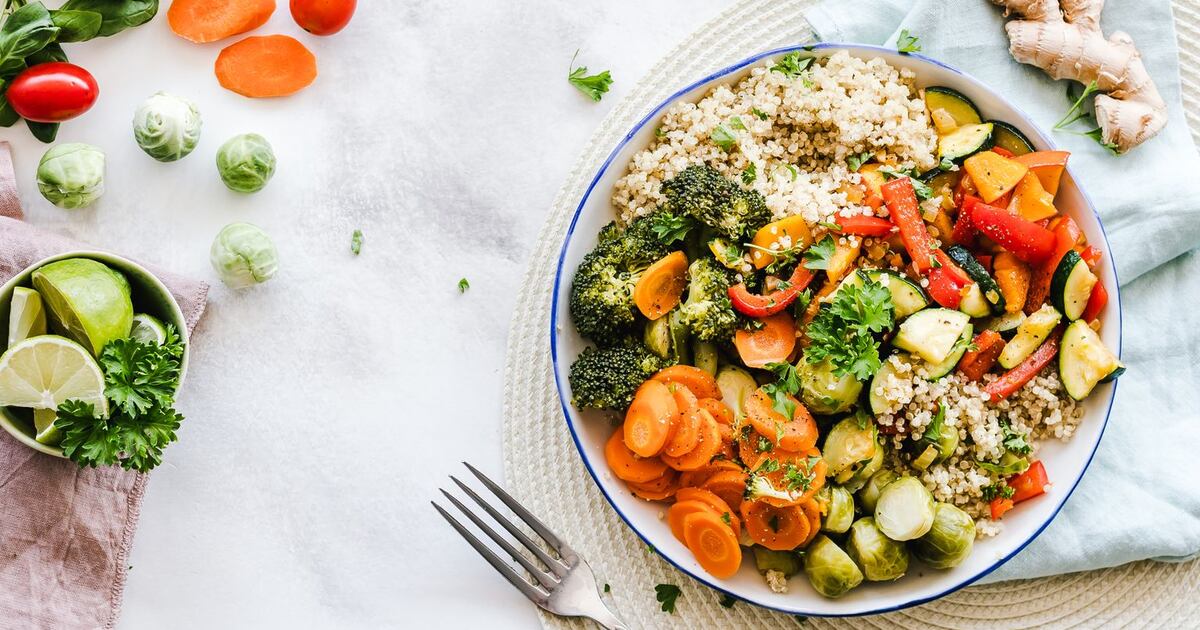
A bowl of quinoa, chickpeas, roasted carrots and broccoli is one way to put more plants on the plate. Try lemon and olive oil, or herbs you already enjoy. If a big raw salad doesn’t sit well with you, cooked vegetables are another way to make a meal you actually want to eat. Walnuts or ground flax can add crunch. None of these foods comes with a promise to heal the gut, and there’s no special schedule for adding oil, seeds or spices.
Do you need to cut out certain foods?
My original series listed foods to cut out, including wheat, dairy, soy and nightshades. The research doesn’t support using that list as a starting point for everyone. A food you don’t tolerate is one thing; a whole list of foods presumed to cause joint inflammation is another. The rheumatoid arthritis guideline doesn’t recommend most formally defined diets because the evidence doesn’t show consistent, meaningful benefits.
If the same food repeatedly seems to cause symptoms, jot down what happened and discuss it with your clinician or a registered dietitian before cutting out several foods. Don’t stop or reduce your medication because you’ve changed your diet or started feeling better. For treatment decisions, talk to your own care team and see our medical disclaimer.
Cover photo: Ella Olsson on Pexels.
(Updated: )